

Menu

SfN 2026Visit us at Booth 816, Washington D.C., Nov 15-18See events

Tucker-Davis Technologies · since 1987

Neuroscience Research Systems

TDT builds turn-key hardware and software systems for neuroscience research. We are known worldwide for high quality products, a concierge sales experience, and exceptional customer service.

Real hardware image of an iConZ-4 with iV2, iA4, iX6, and iM9

Featured system

This is an iCon

The iCon is a bespoke neuroscience system designed for your specific experimental needs.

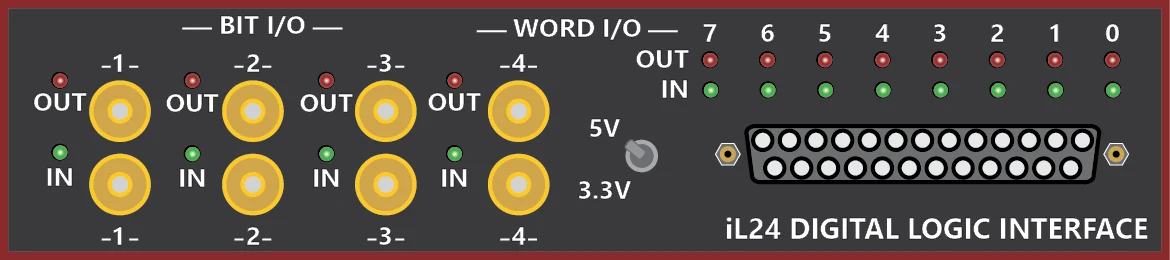
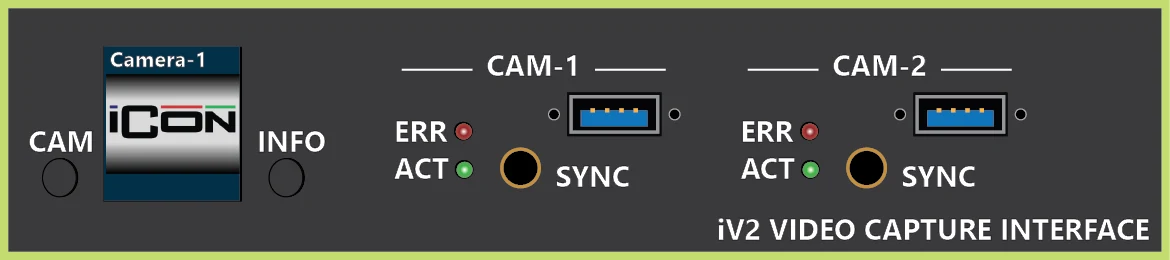
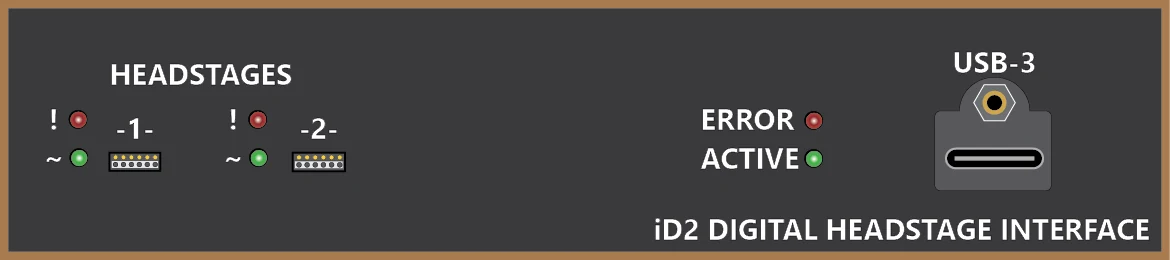
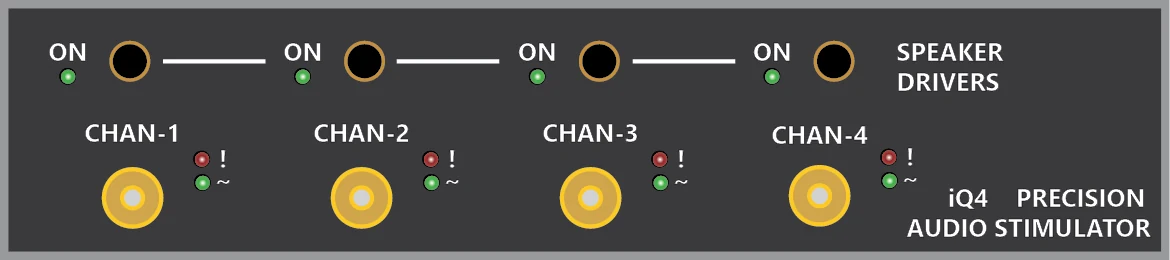
Build it from modulesHover or tap a module to see what it adds
Are you ready for more?

Latest publications

All publications using TDT →

TDT systems have been used in more than 6,000 published studies.

eLife · 2026

Cortical layer 6b mediates state-dependent changes in brain activity and effects of orexin on waking and sleep

Elise J Meijer, Marissa Mueller, Lukas B Krone, … Zoltan Molnar

One of the most distinctive features of the mammalian cerebral cortex is its laminar structure. Of all cortical layers, layer 6b (L6b) is by far the least studied, despite exhibiting direct sensitivity to orexin and having widespread connectivity, suggesting an important role in regulating cortical oscillations and brain state. We performed chronic electroencephalogram (EEG) recordings in mice in which a subset of L6b neurons was conditionally ‘silenced’, during undisturbed conditions, after sleep deprivation (SD), and after intracerebroventricular (ICV) administration of orexin. While the total amount of waking and sleep or the response to SD were not altered, L6b-silenced mice showed a slowing of theta frequency (6–9 Hz) during wake and rapid eye movement (REM) sleep, and a marked reduction of total EEG power, especially in non-rapid eye movement (NREM) sleep. The infusion of orexin A increased wakefulness in both genotypes, but subsequent levels of EEG slow-wave activity during NREM sleep were lower in L6b-silenced animals in the occipital derivation. In summary, these results demonstrate a role for cortical L6b in state-dependent brain oscillations and in the response to orexinergic neurotransmission. Our findings provide new insights in functions of L6b neurons and could inform the understanding of abnormal regulation of brain states in neurodevelopmental and psychiatric disorders.

TDT products used:RZ2PZ5Synapse
Read the paper → (Cortical layer 6b mediates state-dependent changes in brain activity and effects of orexin on waking and sleep, opens in a new tab)
Nature Communications · 2026

Cholinergic-dependent dopamine signals in mouse dorsomedial striatum are regulated by frontal but not sensory cortices

Hannah C. Goldbach, Rachele Rimondini, Evan S. Swanson, … Veronica A. Alvarez

Everyday decisions depend on associations between sensory stimuli, actions, and outcomes. The striatum supports these sensorimotor associations through dopamine-dependent plasticity. Recent work has characterized a local striatal microcircuit in which cholinergic interneurons (CINs) modulate dopamine release via activation of nicotinic receptors on dopamine axons. Here, we show that visual stimuli evoke dopamine in the dorsomedial striatum partly through this cholinergic mechanism. Using anatomical and functional methods to identify the pathways involved, we found that visual and auditory cortices lack connectivity with CINs and were unable to drive cholinergic-dependent dopamine release. Frontal regions, which were activated by visual stimuli, strongly recruited CINs, producing robust dopamine release both ex vivo and in vivo. These findings reveal a fundamental distinction between sensory and frontal corticostriatal inputs, demonstrating that only the latter can evoke cholinergic-dependent dopamine signals. This work establishes a framework for understanding how cortical circuits shape striatal dopamine to support reinforcement learning.

TDT products used:RZ5PSynapse
Read the paper → (Cholinergic-dependent dopamine signals in mouse dorsomedial striatum are regulated by frontal but not sensory cortices, opens in a new tab)
PLOS Biology · 2026

Behavioral engagement and stimulus regularities coordinate auditory-prefrontal network activity

Haoxuan Xu, Peirun Song, Hangting Ye, … Xiongjie Yu

The ability to detect deviations from expected sensory input is fundamental for adaptive behavior. We recorded electrocorticographic activity from the auditory (AC) and prefrontal (PFC) cortices of behaving macaques during an auditory oddball task to probe the cortical dynamics of predictive processing. Repetition of standard stimuli evoked suppression and facilitation in AC and strong low-frequency (2 Hz) enhancement in PFC, accompanied by bidirectional delta-band GC-defined interactions indicative of a shared predictive state. Deviant stimuli triggered earlier AC responses followed by PFC activation and increased GC-defined directed interactions across theta, alpha, and conventional gamma bands. Behavioral engagement amplified both repetition-related and deviance-related ECoG responses, strengthening cortical network coordination. Together, these findings reveal behaviorally gated auditory–prefrontal dynamics that are consistent with hierarchical predictive-processing accounts, while also allowing for contributions from repetition-, novelty-, and salience-related mechanisms.

TDT products used:RZ6RZ5ZIF-Clip 64ZIF-Clip
Read the paper → (Behavioral engagement and stimulus regularities coordinate auditory-prefrontal network activity, opens in a new tab)

What researchers say

More from our customers →

TDT equipment has improved our lab’s productivity...and when questions come up, TDT’s technical team is only a call away with solutions.

Tanuj Gulati, Ph.D., Associate ProfessorCedars-Sinai / UCLA | https://www.gulatilab.org/
Read the full testimonial →

Fewer hours debugging, more hours doing science: hard to beat.

Ross S. Williamson, Ph.D., Assistant ProfessorUniversity of Pittsburgh | www.williamsonlaboratory.com
Read the full testimonial →

Ultimately, what drew me to TDT was the ability to bring multiple experimental approaches together within a single, flexible platform.

Kelsey Anbuhl, Ph.D., Assistant ProfessorCreighton University School of Medicine | Kelseyanbuhl.com
Read the full testimonial →

Legacy. Innovation. Commitment

TDT has been pioneering neuroscience research tools and software since 1987. We have a global presence across five continents and are dedicated to leading and supporting an ever-growing and diverse neuroscience community.

From Design to Support

From Design to Support

From design to manufacturing to support, TDT provides complete hardware and software solutions for optical neuroscience, neurophysiology, and auditory research – all under one roof!

About TDT

Custom-Built Systems

Custom-Built Systems

We have always overseen every aspect of our design and production. TDT’s adaptable approach to engineering allows us to meet the changing needs of our customers.

Products

Unparalleled Support

Unparalleled Support

We are dedicated to providing the highest quality technical support to help you get the most out of your equipment. Every product is carefully assembled, calibrated, and tested before shipping.

Support

Five-Year Warranty

Five-Year Warranty

We hold our customers in the highest regard and pride ourselves on our customer service. TDT leads the industry with a five-year warranty on our products and systems.

Details

Let’s get started >